
If GUNS INC. has a spine, it is the way production grows. Here is how it looks today.
In the flat you do everything by hand. With the first workshop you can hire a worker. Workers are found through a recruiting app on the laptop, run up to three machines and a bench each, get paid daily in cash, and walk out if you stop paying them. They only differ in speed, and the wage follows the speed.
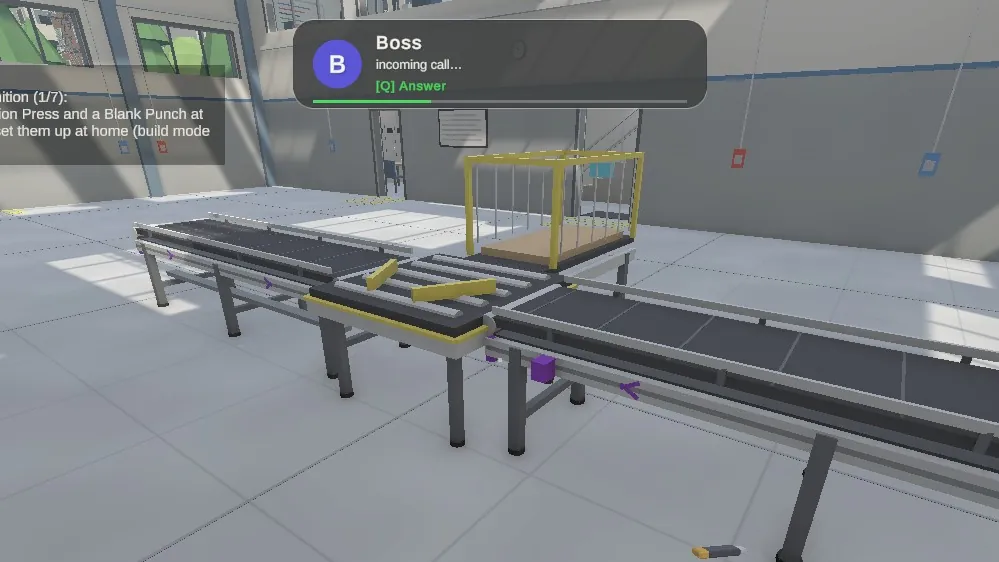
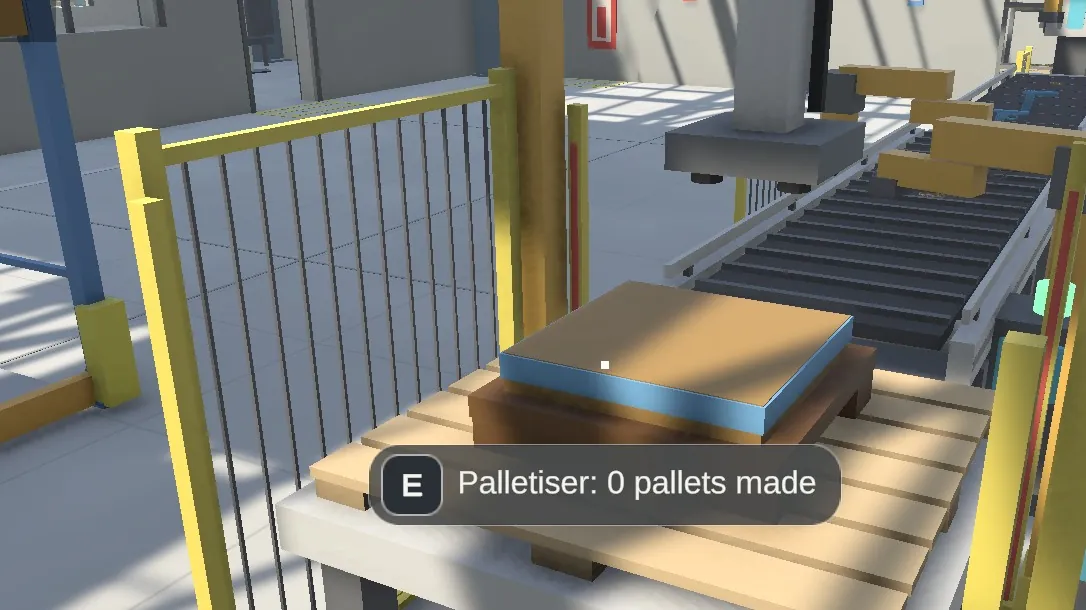
In the industrial hall you can go further and let machines do the work. A conveyor line assembles without anybody standing at it. Material feeders take parts from your shelves, belts carry the real parts from machine to machine, a palletiser stacks ten of the same thing onto a pallet, and pallet racks store them. Connecting is placing: everything flows in at the back and out at the front.
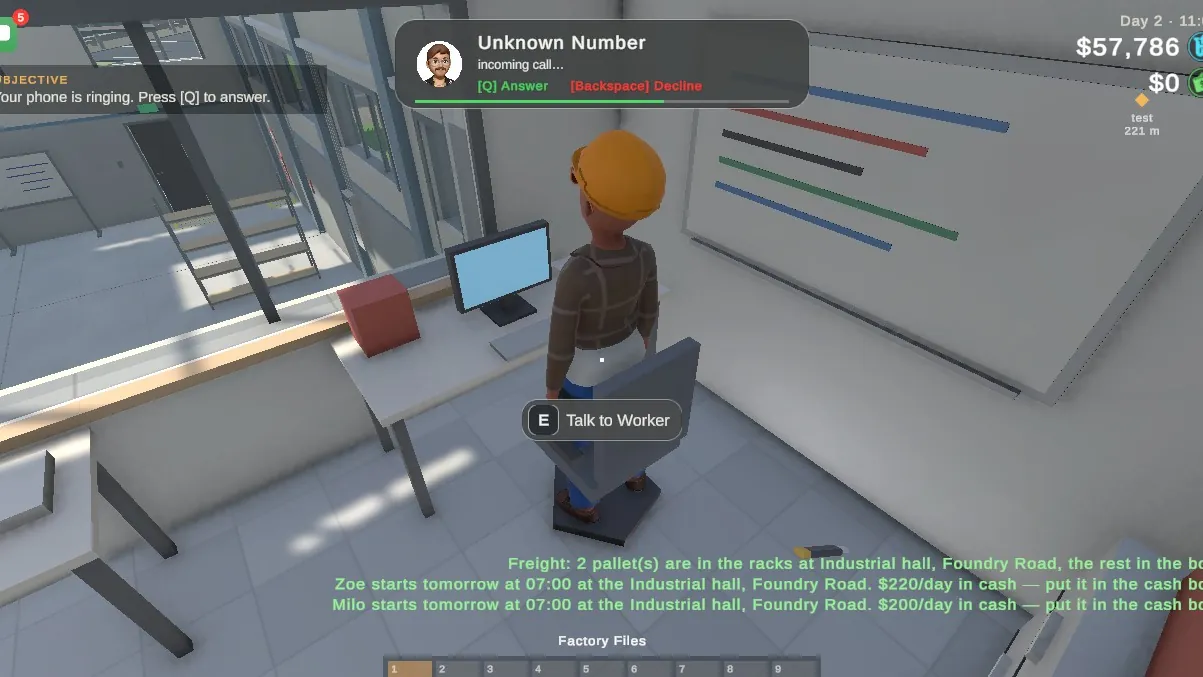
On 1 October I built the biggest site so far, the warehouse at the docks: thirty machines, eight workers, twenty printers. The game's title screen is rendered from inside it. And on the night of 8 October the production endgame went in: the plant keeps books, the Plant app shows where the bottleneck is, lines can be planned and copied, and hired staff sit at desks in your offices and keep the material flowing.
It is the part of the game I enjoy playing most. There is a particular kind of calm in standing in a hall you built and watching it run.