
The most important decision came early: production starts at the very beginning. You are not handed finished products to sell. You start in a small flat with no stock at all, and the flat itself is your first production site.
So the first real system was the printer. You load material, pick a job, and the print runs on game time. That matters more than it sounds: the printer keeps going while you are away. You can start a long job, walk to the shop, meet a customer and come back to a finished part in the tray.
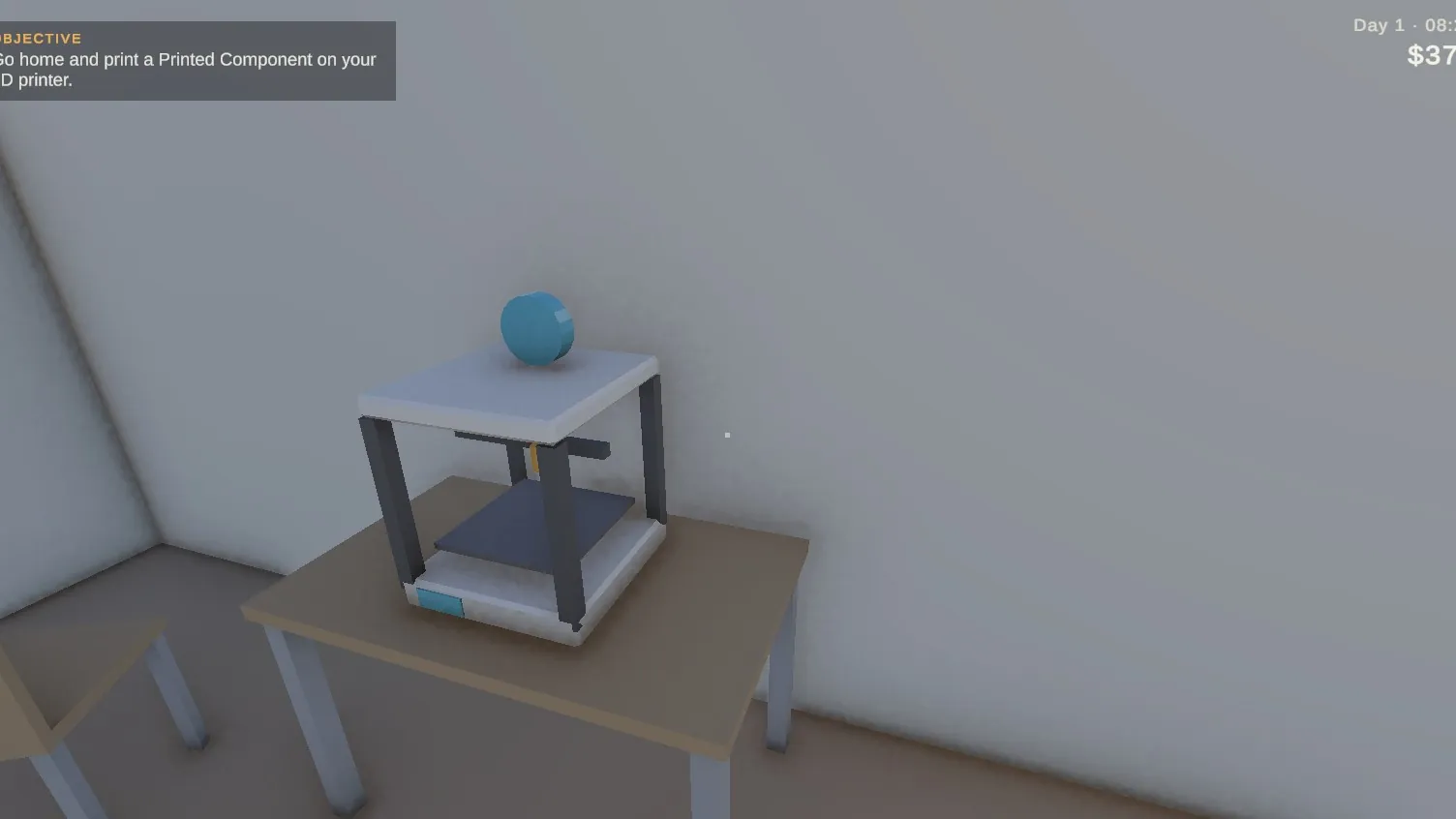
The flat has hard limits on purpose: a few storage places, one or two printers, small products only. It is meant to feel cramped, so that more space becomes something you want, not something the game tells you to buy.
Then the bench. Printed parts and bought components come together at the assembly bench, and today that is completely hands on. The parts lie in a tray, you pick each one up with the mouse and drop it into its slot, it clicks in green when it fits, and then you hold the button until each screw is seated. There is no score and no scrap for being slow: either the product is built or it is not.
What a product is worth comes from its material. Later in September the material became the level: you start with plain PLA filament, move on to carbon on a better printer, and much later to metal from your own mills.
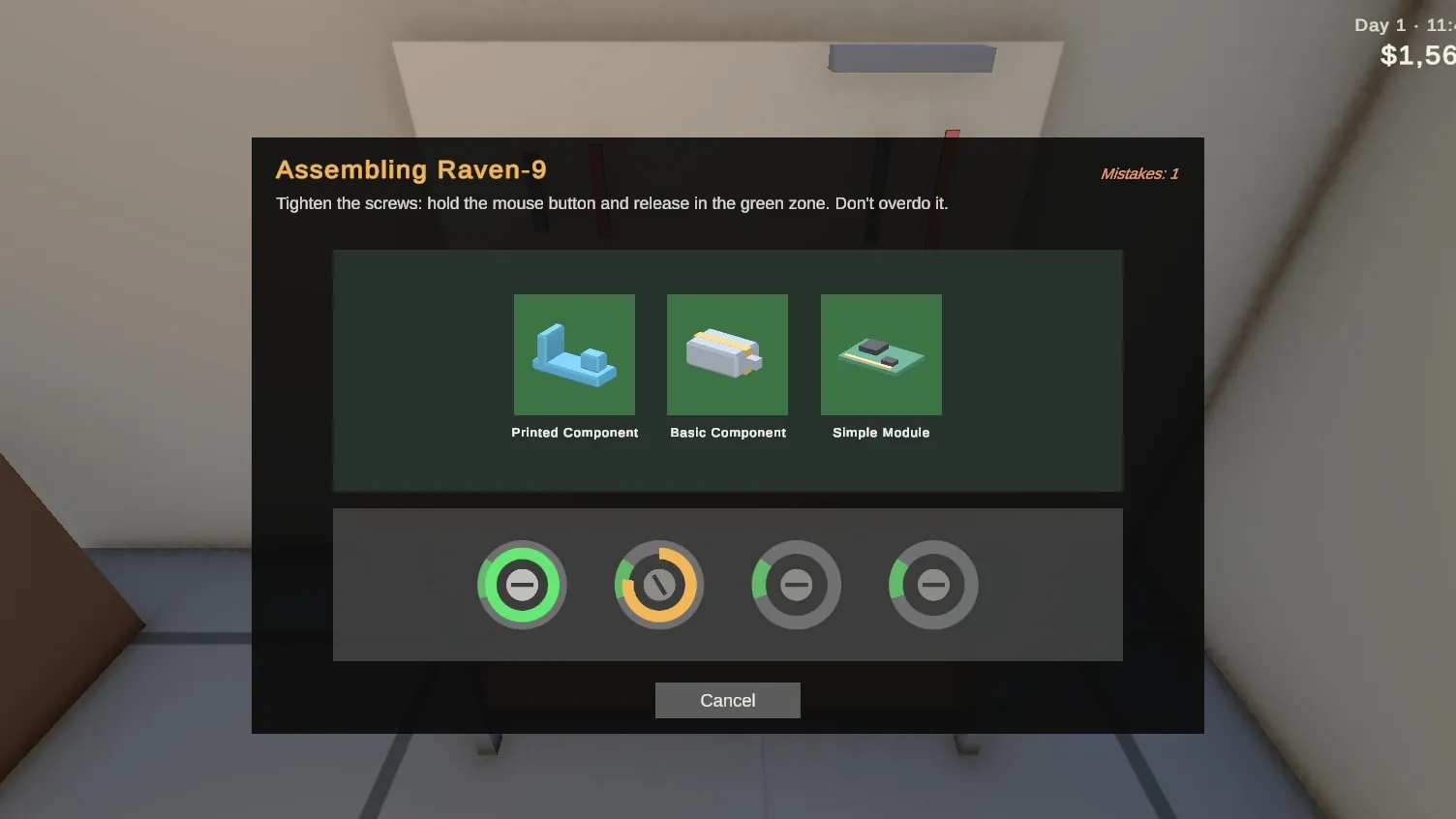
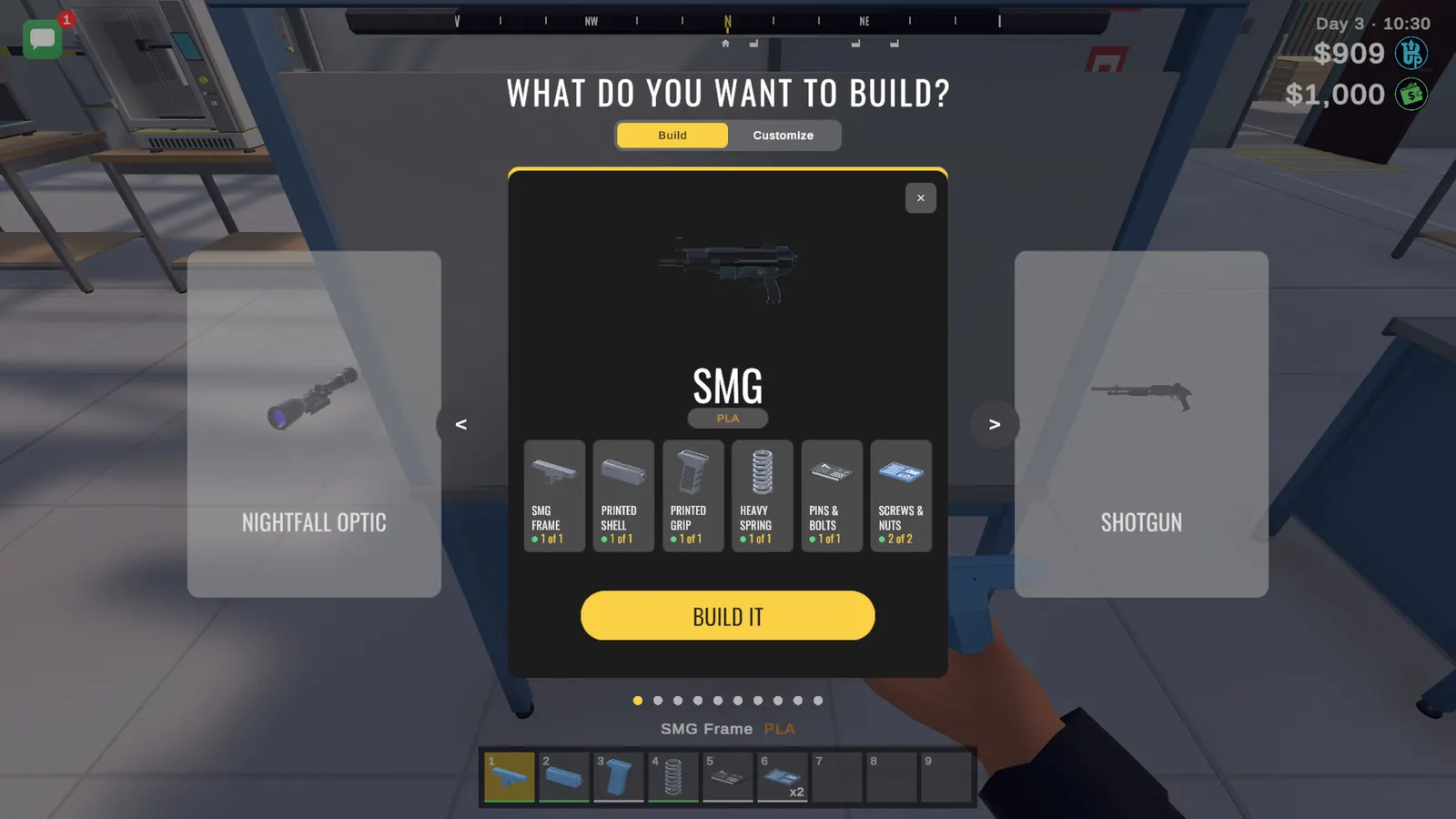
The first product off that bench had a fictional name, Raven-9, and three abstract stats. Watching the whole loop work for the first time (material in, print, take out, assemble, sell) was the moment the project started to feel real to me.